
The issue of a free Tibet continues to loom large over this summer's Beijing Olympics:
Athletes who display Tibetan flags at Olympic venues — including in their own rooms - could be expelled from this summer’s Games in Beijing under anti-propaganda rules.
Jacques Rogge, the president of the International Olympic Committee (IOC), said that competitors were free to express their political views but faced sanctions if they indulged in propaganda.
He accompanied those comments with an admission that the Games were in “crisis” after pro-Tibet protests engulfed the Olympic torch relay.
Mr Rogge’s call for Beijing to abide by its promise to address human rights was given short shrift by Beijing, which bluntly told him to keep politics out of the Games.
Lest anyone come to believe the Olympics can be a politics-free idyll, it's worth remembering that the Games have previously been the site of some fairly courageous political expression:
— Tommie Smith and John Carlos, gold and bronze medalists in the 200 metres, gave the Black Power salute during the American National Anthem in Mexico, 1968, to demonstrate against racial discrimination in their home country. They were expelled from the Games
— The silver medalist in that same race, Peter Norman of Australia, who was white, wore an “Olympic Project for Human Rights” badge in support of Smith and Carlos’s protest. [It was also Norman who suggested that Smith and Carlos share the black gloves used in their salute, after Carlos had left his gloves in the Olympic Village. This is the reason for Tommie Smith raising his right fist, while John Carlos raised his left.] When he died, in 2006, Smith and Carlos were his lead pallbearers.
— Irish athletes boycotted the 1908 Olympic Games in London in protest against Britain’s refusal to give Ireland its independence. The American team also refused to dip its flag to Edward VII during the opening ceremony.
— In 1932 Italian gold medallist Luigi Beccali gave a fascist salute on the podium at the Los Angeles Games.
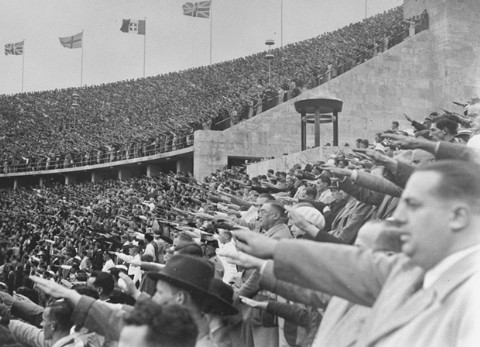
— The Nazis’ appropriation of the 1936 Berlin Games for the purposes of propaganda included the introduction of a grand torch relay to the Games – the very same that is causing trouble today. Boycott efforts by Britain and the US were short-lived, but many Jewish athletes refused to participate.
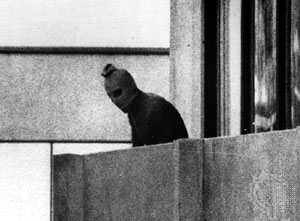
— At the Munich Games of 1972, gunmen from the Palestinian Black September group broke into the compound occupied by Israeli athletes and killed 11 of them. A short documentary on this unforgettable tragedy can be found here.
— In 1980 62 countries – the biggest number in history – boycotted the Moscow Games in protest against the intervention of the Soviet Union in Afghanistan.
— An Eastern bloc boycott was organised in retaliation at the next games in Los Angeles
— Two-time world judo champion Arash Miresmaeili of Iran was eliminated from the 2004 Olympics, officially after failing weight criteria. It seems more likely his exit was because he was drawn against an Israeli. Iran’s National Olympic Committee later said it was “general policy” for Iranian athletes to avoid competing against Israelies.





No comments:
Post a Comment